Chromatogram Integration: Why a Peptide Purity Number Needs Context
Learn why peptide purity on a COA depends on chromatogram integration, baseline choices, resolution, system suitability, and method context.
COA Literacy
Chromatogram Integration: Why a Peptide Purity Number Needs Context
A COA purity percentage is only as meaningful as the chromatographic method behind it. Baselines, peak shape, resolution, and system suitability all affect how peptide HPLC data should be interpreted.
BetterBio Synthesis products and educational materials are intended strictly for laboratory research use only. They are not intended for human consumption, clinical use, veterinary use, diagnosis, treatment, cure, mitigation, or prevention of any disease. This article is educational content for research-literacy purposes and is not medical advice.
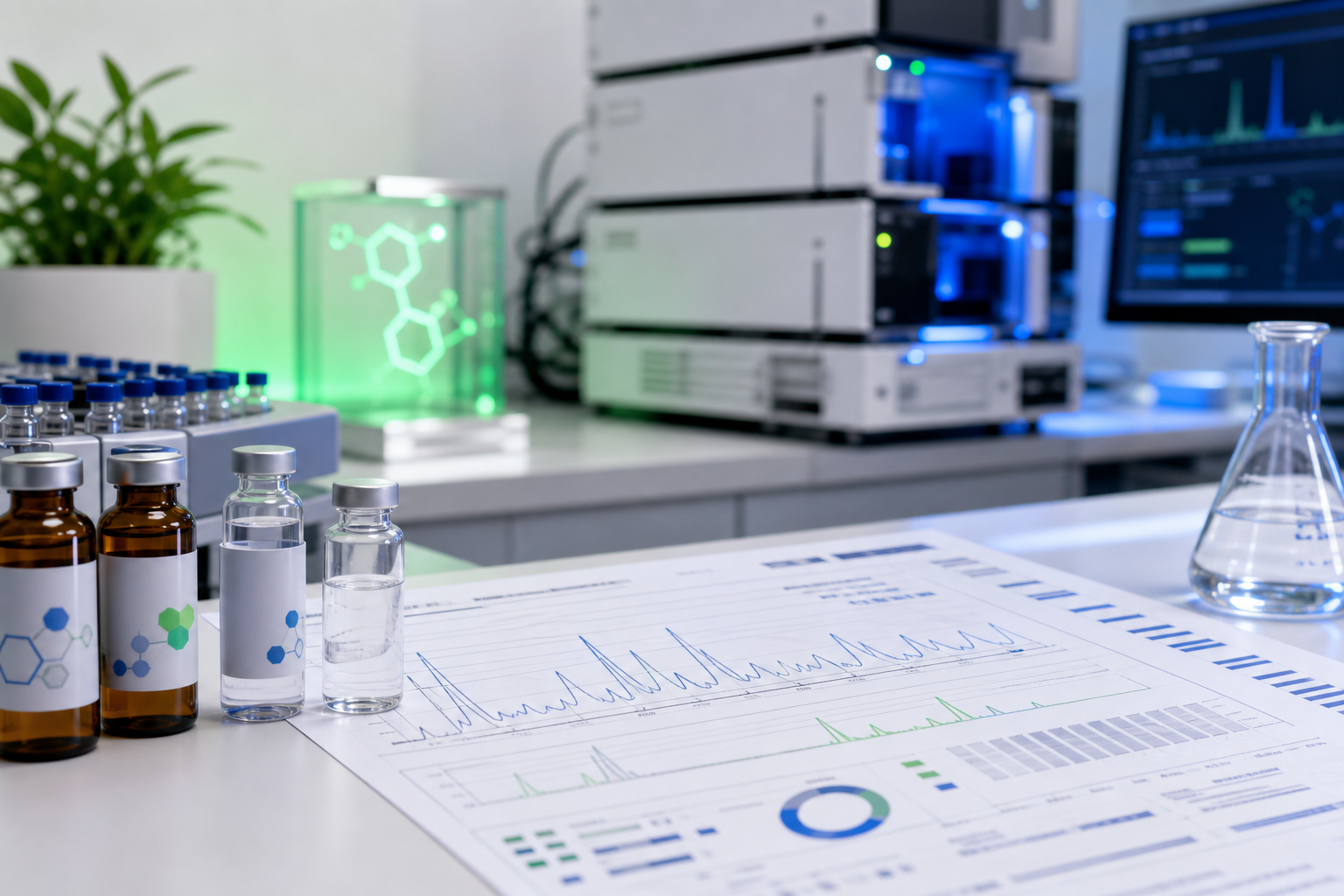
A peptide COA often leads with a number that looks simple: 98%, 99%, or greater than 99% purity by HPLC. That number matters, but it is not the whole story. HPLC purity is calculated from a chromatogram, and a chromatogram is a data output shaped by the method, detector, sample preparation, peak separation, baseline assignment, integration rules, and instrument performance.
For research buyers and lab teams, the better question is not only what purity number is printed on the page. The better question is how that number was generated and whether the surrounding data supports it.