Epitalon and Telomere Biology: What Cellular Aging Research Actually Shows
A BetterBio-style research guide to Epitalon, telomere biology, cellular senescence, and why telomerase findings need careful interpretation.
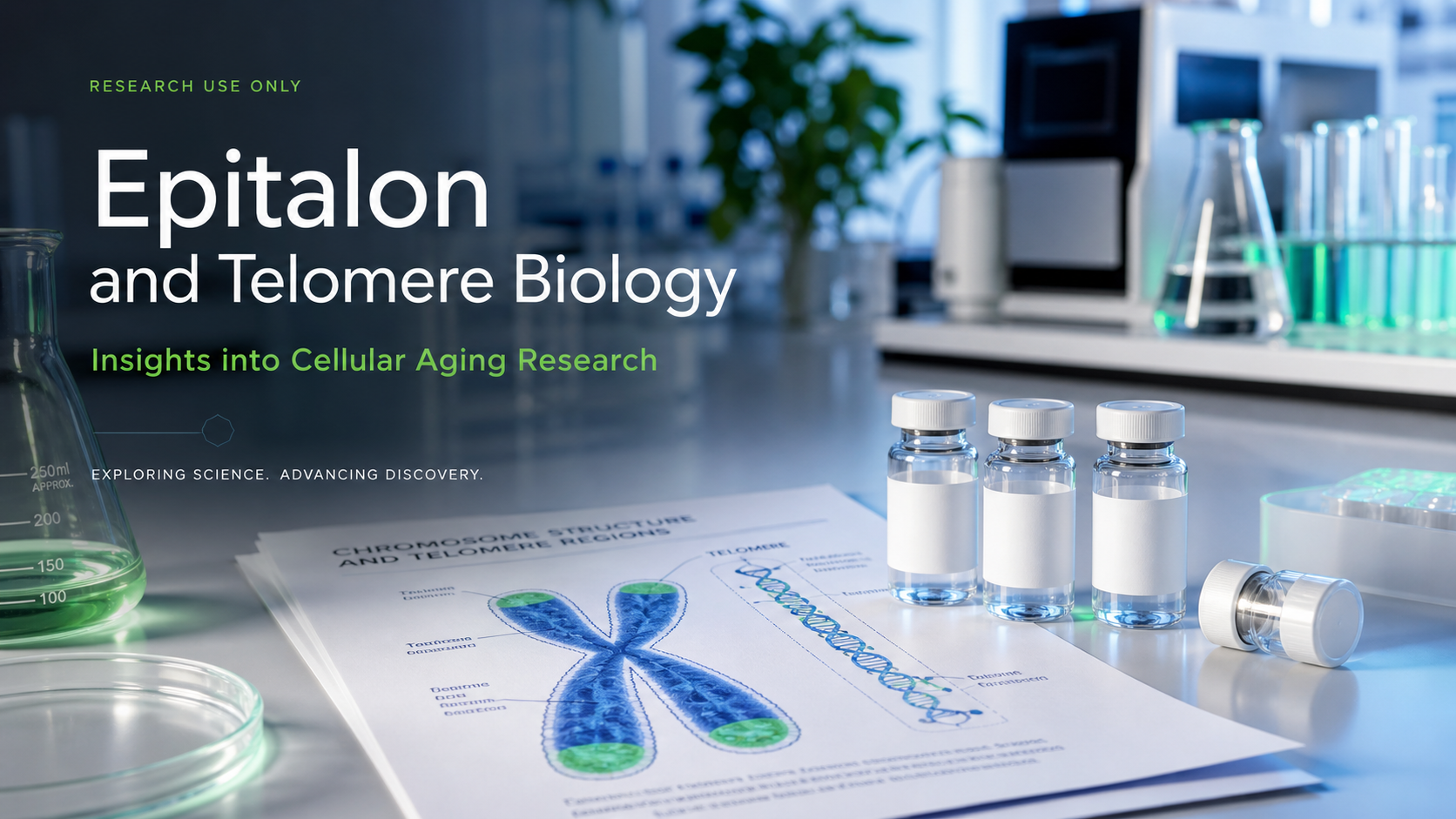
Research Use Only Education
Epitalon and Telomere Biology: What Cellular Aging Research Actually Shows
A research-use-only guide to Epitalon, telomerase, telomeres, and cellular aging models, with clear boundaries around what preclinical findings can and cannot show.
Epitalon, also written as Epithalon, is a short synthetic tetrapeptide commonly described by the amino-acid sequence Ala-Glu-Asp-Gly. In longevity research circles, it is usually discussed because of its proposed relationship to telomere biology, telomerase activity, circadian regulation, and cellular aging models.
Those topics can sound more certain than the evidence allows. Telomeres are real. Telomerase is real. Cellular senescence is a major field of aging biology. But a peptide being studied in relation to those systems does not mean it has been proven to extend human life, reverse aging, treat disease, or produce predictable biological outcomes outside controlled research settings.