GHK-Cu Research: Copper Coordination, Matrix Remodeling, and Evidence Limits
Explore GHK-Cu research across copper coordination, extracellular-matrix remodeling, fibroblast models, material quality, and evidence limits.
Sep 1, 2026 | 7 min read
Copper Peptide Research Literacy
GHK-Cu Research
Copper coordination, extracellular-matrix remodeling, analytical controls, and the evidence limits behind a widely discussed tripeptide complex.
Research Use Only
BetterBio Synthesis materials and educational content are intended strictly for laboratory research use only. This article is not medical advice and does not recommend human or veterinary use. It does not provide dosing, administration, treatment, cure, prevention, or efficacy guidance. Any compound discussed here should be evaluated only by qualified professionals in appropriate research settings.
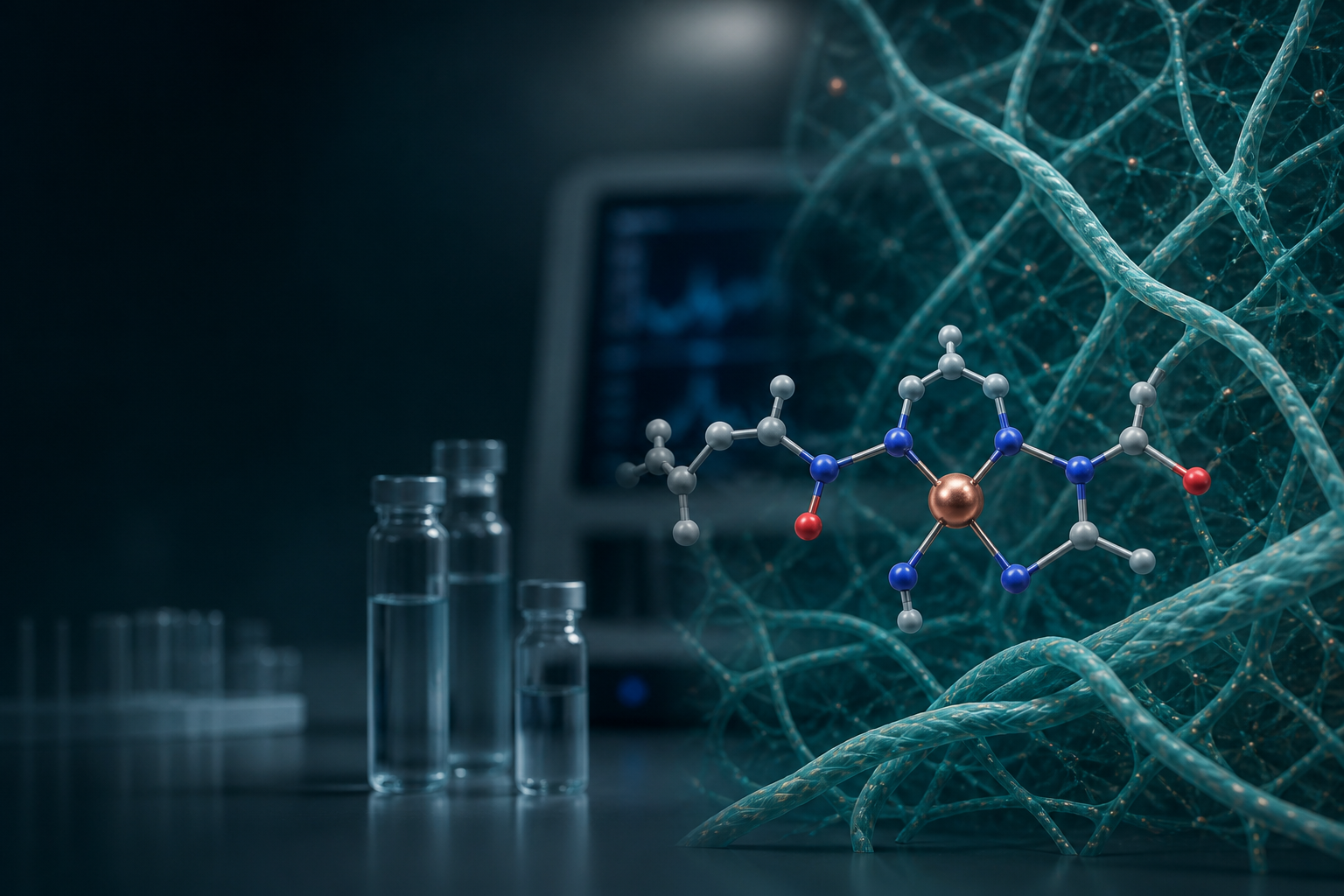
GHK-Cu is often introduced as a “copper peptide,” but that short label can hide the most useful research questions. GHK is a three-amino-acid peptide—glycine, histidine, and lysine—that can coordinate copper ions. Once copper is bound, the resulting complex is not simply the peptide plus a mineral sitting nearby. Coordination changes the chemical species being studied, the interactions available to it, and the analytical controls needed to interpret an experiment.
That distinction matters because GHK-Cu appears in several very different research conversations. It is discussed in copper transport and coordination chemistry, extracellular-matrix remodeling, fibroblast and keratinocyte models, wound-model research, inflammatory signaling, and cosmetic formulation science. Those areas overlap, but they do not provide the same level of evidence and should not be compressed into one broad “regeneration” claim.