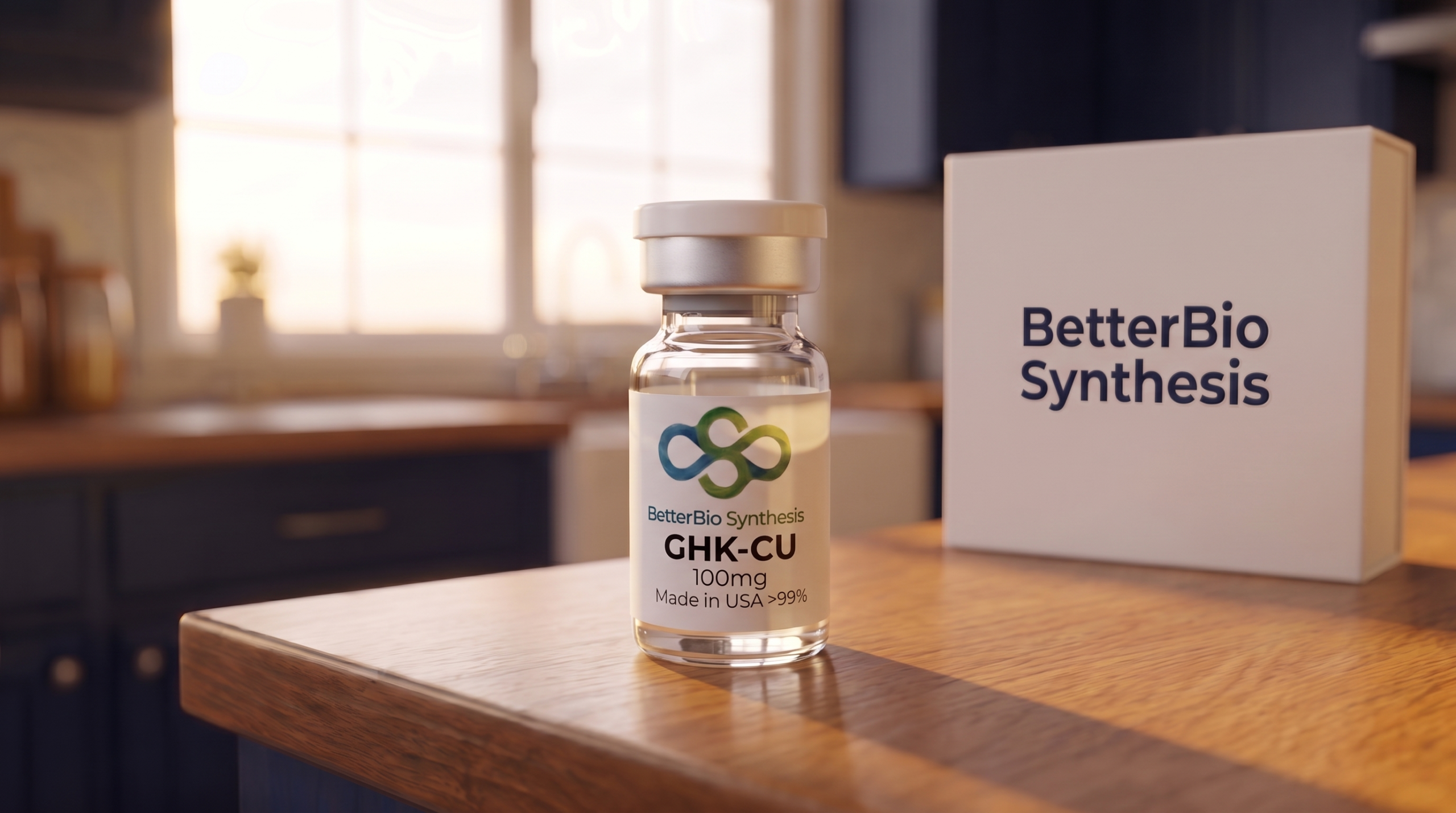
GHK-Cu: The Copper Peptide That Rewrites the Rules on Aging
GHK-Cu — the naturally occurring copper peptide studied for tissue repair, collagen synthesis, inflammation modulation, and gene expression across 4,000 human genes. What the research actually shows. USA manufactured, >99% purity. For Research Use Only.
Jul 3, 2026 | 15 min read
What Is GHK-Cu?
GHK-Cu is a naturally occurring tripeptide – three amino acids: Glycine, Histidine, and Lysine – bound to a copper ion. The copper binding is not incidental. It is structural. The copper ion is what gives GHK its biological activity, enabling it to interact with cell surface receptors and influence intracellular signaling in ways the peptide alone cannot.
Your body produces GHK-Cu endogenously. It is found in human plasma, saliva, and urine, and it plays an active role in your biology throughout your life – coordinating tissue repair responses, modulating inflammation, supporting collagen and elastin production, and regulating gene expression across a remarkable range of biological systems.
The age-related decline in GHK-Cu is well documented:
-> Age 29: approximately 200 ng/mL plasma concentration
-> Age 60: approximately 80 ng/mL – a 60% reduction
-> The decline continues progressively through later decades
This decline tracks closely with many of the hallmark changes associated with aging: slower wound healing, reduced collagen production, increased systemic inflammation, declining skin integrity, and impaired tissue repair capacity. Correlation is not causation – but the mechanistic research on GHK-Cu provides a compelling framework for understanding why the relationship may be more than coincidental.