NAD+ Salvage Pathway Research: NAMPT, Sirtuins, PARPs, and CD38
Learn how the NAD+ salvage pathway, NAMPT, sirtuins, PARPs, and CD38 fit into mitochondrial, metabolic, and longevity research models.
Longevity Research
NAD+ Salvage Pathway Research: NAMPT, Sirtuins, PARPs, and CD38
BetterBio Synthesis products are sold strictly for laboratory research use only. They are not drugs, foods, cosmetics, dietary supplements, or medical products. They are not intended for human or animal consumption, administration, diagnosis, treatment, cure, mitigation, or prevention of disease. This article is educational content for qualified researchers and does not provide medical advice.
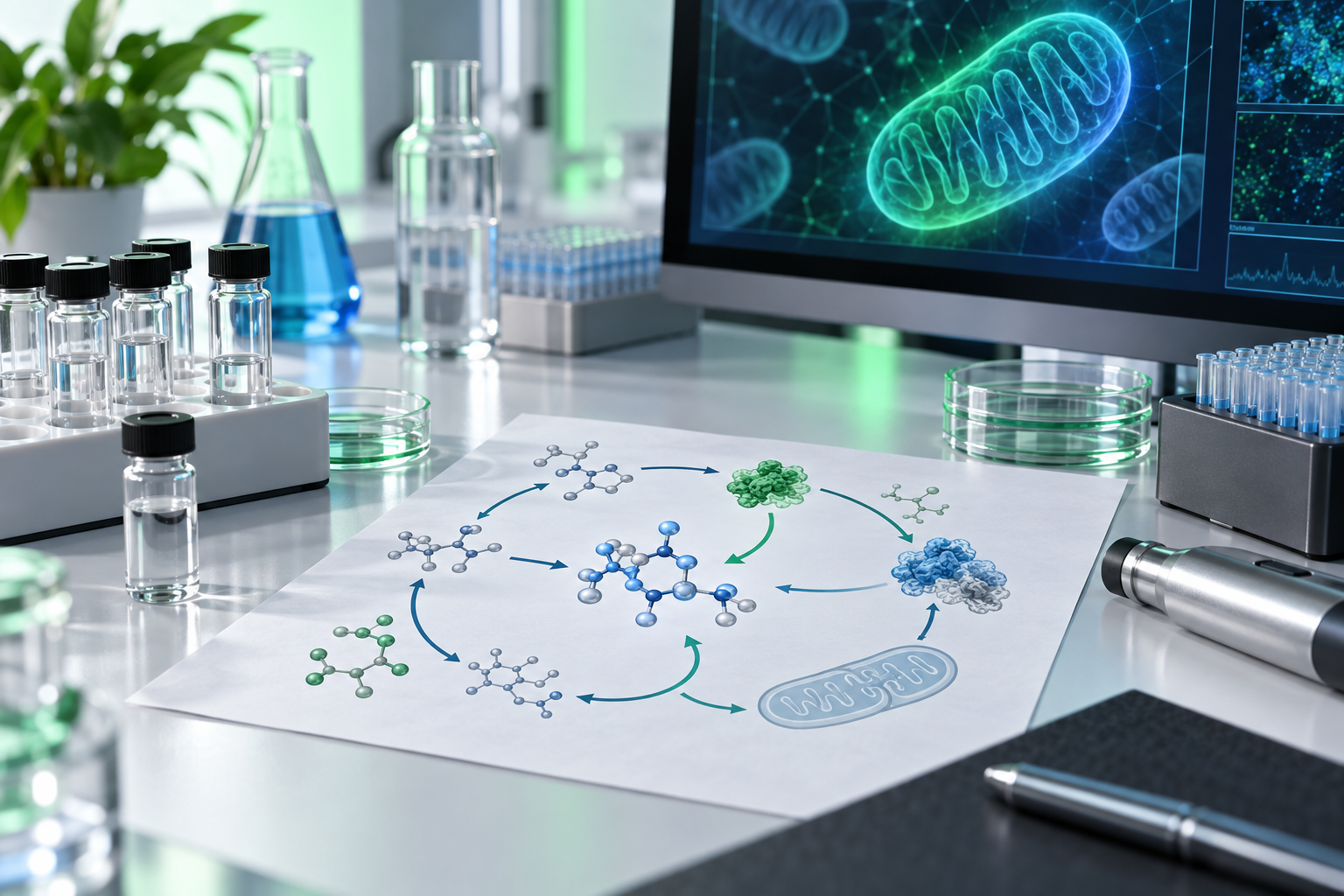
NAD+ biology is more than a single molecule story. The salvage pathway connects energy metabolism, DNA-damage response, sirtuin signaling, inflammation, and cellular aging models.
NAD+ is often described as an energy molecule, but that is only the starting point. In research models, nicotinamide adenine dinucleotide sits at the intersection of redox metabolism, mitochondrial function, DNA-damage response, chromatin regulation, inflammatory signaling, and cellular aging biology.
That broad role is why NAD+ appears so often in longevity and mitochondrial research. It is also why the topic can get oversimplified. A serious NAD+ discussion is not just “more NAD+ equals better biology.” It is a question of where NAD+ is being made, where it is being consumed, which enzymes are using it, and whether a model is measuring pool size, flux, compartment-specific activity, or downstream function.