Peptide Adsorption and Analytical Recovery: Why Vial Surfaces Can Change the Readout
A research-focused guide to peptide adsorption, nonspecific binding, and analytical recovery in peptide testing workflows.
Peptide Adsorption and Analytical Recovery: Why Vial Surfaces Can Change the Readout
Peptide testing is often discussed through headline numbers: purity percentage, molecular weight confirmation, chromatogram shape, endotoxin result, or batch identity. Those are important, but they do not capture every way a peptide sample can become difficult to measure. One quieter issue is adsorption: the tendency of some molecules to stick to surfaces during preparation, storage, transfer, or analysis.
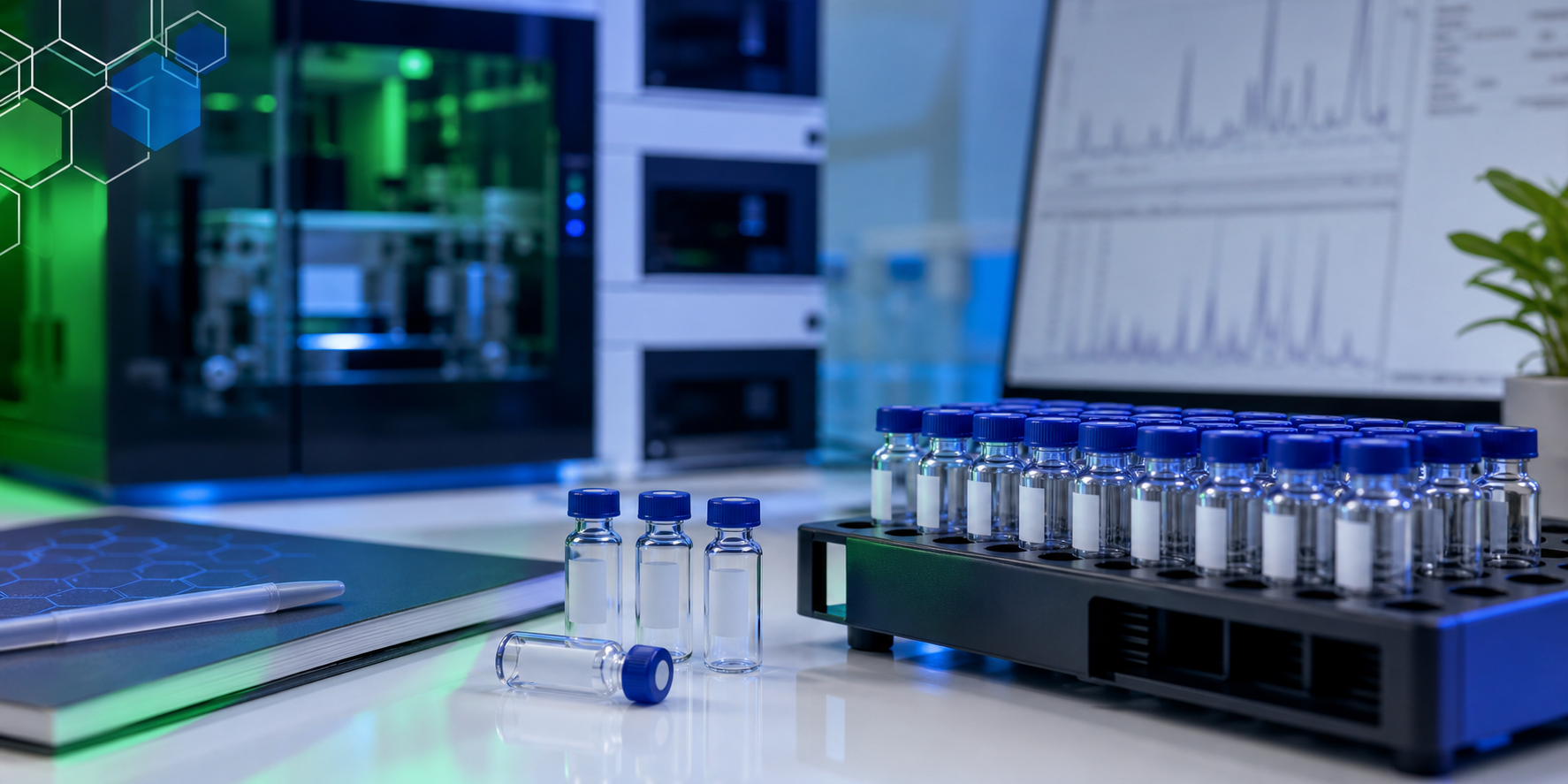
For research-use-only peptide work, adsorption matters because the sample a researcher prepares is not always the same sample the instrument finally sees. A peptide may bind to glass, plastic, filters, pipette tips, vial inserts, tube walls, or other contact surfaces. If enough material is lost along the way, the final analytical signal can appear lower than expected even when the starting material was correct.