Peptide Photostability: Why Light Exposure Belongs in Research Storage Review
Light is a real stability variable for research peptides. Photostability review helps researchers understand why amber vials, dark storage, batch documentation, and oxidation-aware handling belong beside purity and identity testing.
Research Storage Literacy
Peptide Photostability: Why Light Exposure Belongs in Research Storage Review
Light is a real stability variable for research peptides. Photostability review helps researchers understand why amber vials, dark storage, batch documentation, and oxidation-aware handling belong beside purity and identity testing.
BetterBio Synthesis materials are sold for laboratory research use only. This article is educational content for researchers reviewing peptide photostability, light exposure, storage documentation, and analytical quality context. It is not medical advice, does not recommend human or veterinary use, and does not provide dosing, administration, treatment, cure, or efficacy guidance. All compounds discussed must be handled only by qualified professionals in appropriate research settings.
Quick Read: What photostability means
Photostability describes how a material responds to light. For research-use peptides, it is a quality and reproducibility question: whether light exposure could affect degradation, oxidation, purity, identity, or handling interpretation.
Why amber vials and dark storage matter
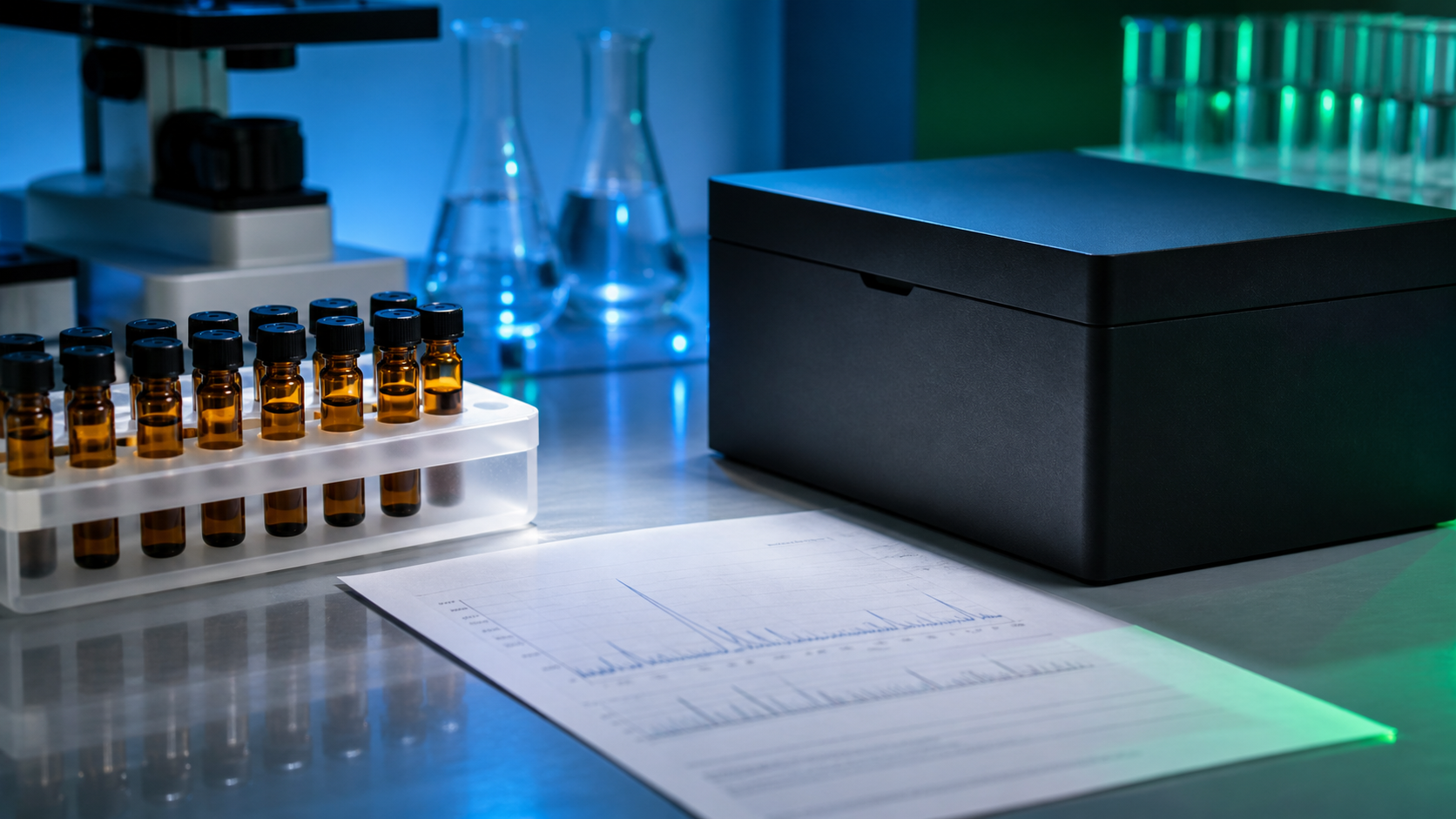
Amber glass and opaque secondary packaging reduce light exposure, but they do not replace temperature, moisture, oxygen, or batch documentation controls. Packaging is one layer of the quality chain.