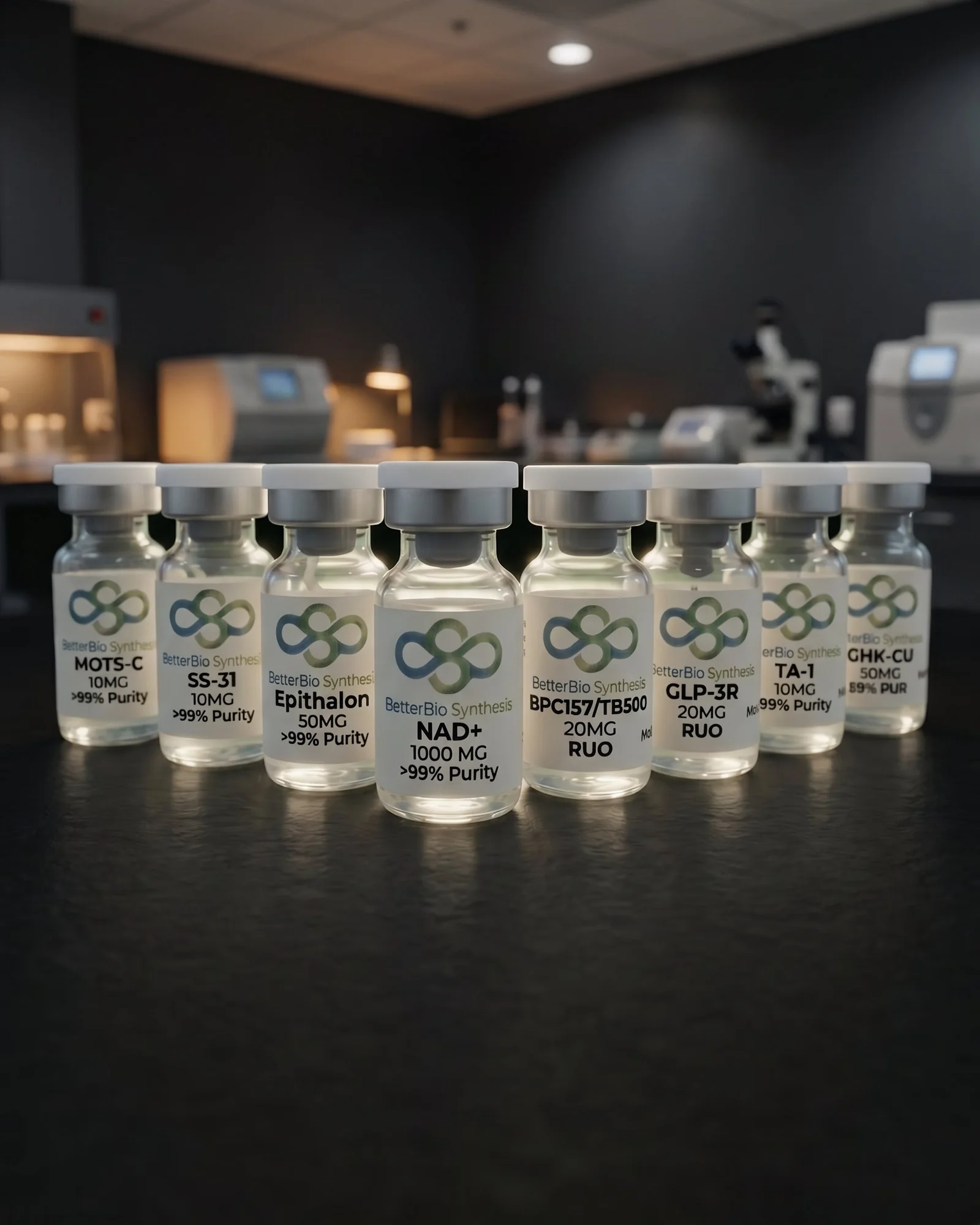
Peptides Are Not Drugs — They’re Amplifiers of Biology
: Peptides aren't drugs — they're biological signals your body already uses. Here's what they actually are, how they work, and why the distinction matters for research. For Research Use Only.
Jul 3, 2026 | 12 min read
What a Drug Does vs What a Peptide Does
This is the most important distinction in all of peptide research – and most people get it wrong.
A drug is typically a foreign molecule that overrides, blocks, or mimics a biological process. It intervenes from the outside. Think of a painkiller blocking pain receptors, or a blood pressure medication forcing blood vessels to relax. Drugs work by interrupting or replacing biology.
A peptide is different. Peptides are biological signals – short chains of amino acids that your body already produces and already understands. When a research peptide binds to a receptor, it is speaking a language your cells already know. It is not overriding biology. It is amplifying, restoring, or redirecting a signal that already exists in your biological system.
This is why the research community distinguishes peptides from conventional pharmaceuticals. The mechanism of action is fundamentally different. Drugs impose. Peptides communicate.
That said – this distinction does not mean peptides are without risk or without regulatory consideration. All compounds sold by BetterBio Synthesis are for Research Use Only (RUO). They are not approved by the FDA for human therapeutic use. Not medical advice. Must be 21+.
But understanding the difference matters – because it changes how researchers think about what they are studying and why.