Education Hub
Plain-language articles on peptide analysis, COA terms, and experimental methods.
What "Pure" Actually Means
Purity, identity, content, and contaminants are different analytical questions. Start with the matching batch report and the scope of each test.
ICH Q3C Solvent Classes — Read in Context
| Class | Guideline context | Examples | Interpretation | Batch evidence |
|---|---|---|---|---|
| Class 1 | Avoid | Benzene, carbon tetrachloride, 1,2-dichloroethane | Check the current guideline | ✓ Only as reported |
| Class 2 | Limit | Acetonitrile, dichloromethane, dimethylformamide | Criteria have defined assumptions | ✓ Only as reported |
| Class 3 | Low toxic potential | Ethanol, acetone, isopropanol | Assess the application and method | ✓ Only as reported |
Understanding Endotoxin Results
What to Check
- • Matching product and lot identifiers
- • Named tests and analytical methods
- • Results with units and reporting limits
- • Identity, purity, and content distinguished
- • Report issuer and verification details
- • Criteria appropriate to the research model
When to Ask for Clarification
- • Missing or inconsistent lot numbers
- • A report that cannot be verified
- • A result without its method or units
- • Tests claimed but not documented
- • Unclear reporting or acceptance limits
- • Pending records presented as completed tests
Reading a Solvent Panel
- • Identify which solvents were tested
- • Keep the reported units intact
- • Read each analyte separately
- • Check detection or reporting limits
- • Identify the specification used
- • Do not infer results for unlisted solvents
Latest from the Lab

Two Deaths Reported to FDA: What the Retatrutide Reports Actually Show
Two death reports involving products sold as retatrutide are now in FDA records. The reports matter, but they do not ver...

Why Oral Peptides Are Hard to Deliver: The Barriers Before Circulation
Before an intact peptide reaches circulation, it must survive a sequence of chemical, enzymatic and physical barriers. H...

GHK-Cu Reactions Are Not a Copper Tolerance Test
A noticeable reaction to GHK-Cu cannot reveal a precise copper tolerance limit. Here is why symptoms, exposure, formulat...

How Oral Semaglutide Gets Absorbed: SNAC and the Stomach Barrier
Oral semaglutide is a case study in pharmaceutical formulation. Here is how SNAC creates a localized gastric environment...

Retatrutide Beyond Weight Loss: What the Metabolic Markers Actually Show
Retatrutide trials are measuring much more than body weight. Here is what the reported metabolic markers show, where the...

Does Retatrutide Protect Muscle During Weight Loss? What the DXA Data Show
A Phase 2 DXA substudy found that retatrutide-associated weight loss came primarily from fat, while lean mass also decli...

TRIUMPH-2 A1C Results: Why Normal-Range A1C Is Not Diabetes Remission
TRIUMPH-2 reported large A1C improvements in adults with type 2 diabetes and obesity or overweight. Here is what those r...

TRIUMPH-2 Cardiovascular Risk Markers: What the Retatrutide Data Show
The weight-loss headline was only part of the TRIUMPH-2 story. Here is what the reported changes in triglycerides, non-H...

The GLP-1 Thyroid Cancer Warning: Where It Came From and What Human Studies Show
The GLP-1 boxed warning originated in rodent C-cell studies. Human evidence is mixed but mostly reassuring in the short ...

GLP-1 Gallstones and Pancreatitis: Separating Drug Effects From Rapid Weight Loss
Gallbladder disease and pancreatitis are often grouped together in GLP-1 discussions, but the evidence, mechanisms, and ...

Retatrutide and Cancer Research: What GLP-1 Studies Can and Cannot Tell Us
Recent GLP-1 studies report lower rates of some obesity-associated cancers and improved breast-cancer outcomes, but none...

What the FDA Actually Cited in the September 2026 Peptide Warning Letters
Five peptide warning letters posted in September 2026 show how FDA read website claims and bundled reconstitution produc...

SLU-PP-332 vs SLU-PP-915: What the Research Shows and Which Form Was Studied
SLU-PP-332 produced notable preclinical findings, but every published in vivo efficacy study used injection. SLU-PP-915 ...

How a Research Peptide Gets From Synthesis to a Sealed Vial
A peptide vial carries the history of every upstream handoff. Learn what each stage controls, which documents matter, an...

What Comes After R3TA? The Follow-Up Questions Research Still Needs to Answer
The end of an R3TA study is not the end of the research question. The next phase is learning what persists, what reverse...

UBT251: Novo Nordisk’s Triple-Agonist Bet and the Retatrutide Comparison
Novo Nordisk licensed UBT251 in 2025. Here is what its 24-week China phase 2 result shows, why retatrutide comparisons n...

Can GLP-1 Drugs Make You Go Blind? NAION, Retinopathy, and the Evidence
What does the evidence actually say about GLP-1 drugs and vision loss? A clear look at semaglutide, rare NAION, diabetic...

41 Versus 40: The Retatrutide Classification Case
One amino acid could shape the future of an entire drug class. Here is what the Lilly–FDA dispute over retatrutide’s cla...

NMR in Peptide Quality Review: What Structure Signals Add to a COA
NMR can add orthogonal structural evidence to peptide quality review, but it should be read alongside HPLC, MS, and batc...

HPLC vs. Mass Spectrometry: What Peptide COA Testing Actually Confirms
A peptide COA is most useful when it separates purity, identity, and method limits. Here is how HPLC and mass spectromet...

NAD+ Salvage Pathway Research: NAMPT, Sirtuins, PARPs, and CD38
NAD+ biology is more than a single molecule story. The salvage pathway connects energy metabolism, DNA-damage response, ...

Mass Accuracy and ppm Error: Reading Peptide MS Results on a COA
A peptide MS result is more useful when the COA shows expected mass, observed mass, charge state, calibration context, a...

Peptide Counterions and Net Content: Why Salt Form Matters on a COA
A peptide vial is not always just peptide. Counterions, water, salts, and residual process components can change how res...

Glass Transition and Cake Collapse: Why Lyophilized Peptide Structure Matters
A lyophilized peptide vial is more than dried powder. Glass transition, residual moisture, and cake structure can influe...

Aspartimide Formation and Racemization: A Hidden Peptide Quality Variable
Some peptide impurities are not simple missing-residue fragments. Aspartimide formation and racemization can create clos...

HPLC UV Detection Wavelengths: Why 214 nm and 280 nm Can Tell Different Peptide Stories
HPLC purity is often shown as a clean percentage, but UV detector wavelength can change how peptide peaks appear. This R...

Bioburden, Sterility, and Endotoxin Testing: Three Different Questions in Peptide QC
Bioburden, sterility, and endotoxin testing are often grouped together, but they do not measure the same thing. For rese...

HPLC Retention Time and Peptide Hydrophobicity: What the Chromatogram Can and Cannot Prove
Retention time is one of the most familiar numbers on a peptide HPLC report, but it is not a standalone identity guarant...

Retatrutide Beyond Regulation: Lawsuits, Payments, Shipping, and Research-Market Infrastructure
The retatrutide conversation now reaches beyond regulation into litigation, payment processing, imports, shipping access...

GHK-Cu Research: Copper Coordination, Matrix Remodeling, and Evidence Limits
GHK-Cu sits at the intersection of copper coordination chemistry and extracellular-matrix research. The useful question ...

Extractables and Leachables in Peptide Vial Systems: Why Packaging Belongs in Quality Review
A peptide vial is not just storage. Glass, caps, stoppers, liners, and handling conditions can influence what a research...

Before Stacking Research Compounds, Study the Foundations First
More compounds do not automatically create better research design. Sleep, inflammation, gut health, and mitochondrial fu...

GLOW vs KLOW: What KPV Adds to a Research Blend
GLOW and KLOW overlap across skin, hair, nails, connective-tissue, and recovery-pathway research. KLOW adds KPV, which b...

Proteolytic Stability in Peptide Research: Why Matrix Context Matters
A peptide can be correct by sequence and still behave differently once exposed to enzymes, serum, plasma, tissue homogen...

CD and FTIR in Peptide Conformation Testing: What Structure Signals Add to a COA
Purity and identity testing answer critical questions, but peptide research often needs another layer: what shape is the...

Peptide Receptor Trafficking: Why Internalization Matters in Signaling Research
Peptide receptor signaling does not stop at ligand binding. Internalization, recycling, desensitization, and endosomal s...
TB-500 and Thymosin Beta-4 in Cardiac Repair Research: Blood Flow, Scarring, and Recovery Models
TB-500 and thymosin beta-4 are often discussed together, but the evidence should be read carefully. Cardiac repair resea...

BPC-157 for Dogs: What the Research Actually Shows
BPC-157 is discussed in animal research around gut, tendon, and joint recovery pathways. For dogs specifically, the evid...

Intestinal Barrier Research: Tight Junctions, Mucus, and Permeability Models
Intestinal barrier research is not just about whether a model is "leaky." The more useful question is which layer change...
GLP-1 Research Beyond Weight Loss: Liver Fat, A1C, Inflammation, and Cardiovascular Outcomes
GLP-1 research is no longer just a body-weight story. The stronger research question is how incretin signaling connects ...
Tesamorelin and Stubborn Belly Fat: A Research Guide to Visceral Adipose Tissue
Tesamorelin research is often linked to abdominal fat, but the useful scientific distinction is visceral adipose tissue ...

Peptide Lipidation and Albumin Binding: Why Half-Life Engineering Matters in Research
Lipidation is one way researchers tune peptide behavior without changing the core signaling sequence. The key question i...

MS/MS Fragmentation: Sequence Confirmation in Peptide Quality Research
MS/MS fragmentation adds sequence-level context to peptide quality research by showing how a molecule breaks into interp...

AMPK and mTOR: Nutrient-Sensing Pathways in Metabolic Research
AMPK and mTOR are two major nutrient-sensing pathways that help researchers interpret energy stress, growth signaling, a...
Nrf2/Keap1 Redox Signaling: A Research Guide to Cellular Stress and Mitochondrial Control
Nrf2/Keap1 signaling is one of the core cellular stress-response systems used to study redox balance, antioxidant gene e...

Selank Research Overview: Sequence, Mechanistic Signals, and Evidence Limits
A free, no-signup Selank research paper mapping its sequence, mechanistic research, evidence limits, biodegradation, qua...
SASP and Cellular Senescence: Why Aging Cells Still Send Powerful Signals
Senescent cells do not simply stop dividing. Through SASP signaling, they can reshape local tissue environments, recruit...
Mitophagy and Mitochondrial Quality Control: How Cells Clear Damaged Mitochondria
Mitophagy is the selective recycling system cells use to remove damaged mitochondria. For researchers studying mitochond...
SEC and DLS in Peptide Aggregation Testing: What Researchers Should Know
Peptide aggregation can affect purity, recovery, appearance, and reproducibility. SEC and DLS answer different quality q...
Peptide Photostability: Why Light Exposure Belongs in Research Storage Review
Light is a real stability variable for research peptides. Photostability review helps researchers understand why amber v...
Trace Metals and Elemental Impurities: The COA Detail Peptide Researchers Should Not Ignore
A peptide can look strong on HPLC purity and still deserve a closer look at elemental impurities. Trace metals are a sep...
The Mitochondrial Unfolded Protein Response: A Research Guide to Cellular Quality Control
The mitochondrial unfolded protein response is a cellular stress pathway that helps researchers understand how cells res...

Retatrutide and Addictive Behavior: What the Research Actually Shows
Retatrutide has not been tested for addiction outcomes in humans. The direct evidence is one rat alcohol-discrimination ...
Net Peptide Content vs. HPLC Purity: Why One Number Never Tells the Whole Story
HPLC purity can show how clean a peptide-related chromatographic profile looks, but it does not automatically tell you h...
Peptide Deamidation and Isomerization: Why One Dalton Can Change the Quality Story
Deamidation and isomerization can turn a simple purity number into a more nuanced quality question. Learn why sequence c...
Peptide Glycation and Reducing Sugars: Why Excipients Belong in Quality Review
Peptide quality is not only about the active sequence. Reducing sugars, excipients, moisture, and storage conditions can...
Peptide Oxidation: Why Light, Oxygen, and Trace Metals Matter in Research Vials
Peptide oxidation is one reason storage, packaging, and analytical testing matter. Oxygen, light, trace metals, and sequ...
Peptide Deletion Sequences: Why One Missing Amino Acid Can Matter
A peptide can look strong by purity percentage while still containing synthesis-related variants that are close to the t...
Peptide Terminal Modifications: Why Acetylation and Amidation Matter in Research
Terminal modifications can change how a peptide behaves in a research system. Acetylation and amidation are small chemic...
Sermorelin and GHRH Receptor Research: Understanding Upstream GH-Axis Signaling
Sermorelin is best understood as an upstream GHRH receptor research peptide, not as a shortcut label for broad outcome c...
Container Closure Integrity: Why Peptide Vials Are Part of Quality Review
Peptide quality is not only about the powder inside the vial. Container closure integrity helps protect lyophilized rese...
Peptide Disulfide Bridges: Why Cysteine Pairing Belongs in Quality Review
Disulfide bridges can help define a peptide's folded structure. For cysteine-containing research peptides, cysteine pair...
Peptide Chirality and D/L Amino Acids: Why Stereochemistry Belongs in Quality Review
A peptide can have the expected mass and still raise stereochemical questions. Chirality helps explain why D/L amino aci...
pH, Buffer Conditions, and Peptide Stability: What Researchers Should Know
pH and buffer conditions can change peptide charge, solubility, degradation rate, and aggregation behavior. For research...
Peptide Aggregation and Particulate Quality: What Researchers Should Look For
Peptide aggregation is not just a cosmetic issue. It can change apparent concentration, complicate assay interpretation,...
Mitochondrial Signaling and Metabolic Flexibility: Why Fuel Use Is More Than Calories and Willpower
Progress in metabolic research is not only about calories and willpower. Mitochondrial signaling helps explain how cells...
GIP Receptor Research: Why the "Other Incretin" Matters in Metabolic Pathway Studies
GIP is often treated as the quieter partner beside GLP-1, but GIP receptor biology is central to how researchers interpr...
GLP-1 Receptor Biased Signaling: Why cAMP, Beta-Arrestin, and Trafficking Matter
GLP-1 receptor research is not only about whether a peptide activates the receptor. The pathway, timing, and trafficking...
Cagrilintide and Amylin Research: Why GLP-1 Is Not the Whole Metabolic Story
GLP-1 gets most of the attention, but amylin research adds a second metabolic signal with its own receptors, brain circu...
Epitalon and Telomere Biology: What Cellular Aging Research Actually Shows
A BetterBio-style research guide to Epitalon, telomere biology, cellular senescence, and why telomerase findings need ca...
Peptide Adsorption and Analytical Recovery: Why Vial Surfaces Can Change the Readout
A research-focused guide to peptide adsorption, nonspecific binding, and analytical recovery in peptide testing workflow...
Thymosin Alpha-1 Research: How One Thymic Peptide Connects Innate and Adaptive Immunity
A research-focused guide to Thymosin Alpha-1, the thymic peptide studied for immune signaling, dendritic-cell activity, ...
GLP-2 and Intestinal Barrier Research: A Mechanism Guide for RUO Studies
GLP-2 is a proglucagon-derived peptide studied for its role in intestinal adaptation, epithelial barrier regulation, muc...
Peptides Are Not Legal Steroids: Why the Biology Is Completely Different
Peptides and steroids are both biologically active signaling molecules, but they are not the same thing. This guide expl...
Peptide Reference Standards: Why Calibration Matters in COA Testing
A COA result is only as useful as the analytical comparison behind it. This guide explains how reference standards, cali...
Retatrutide Research: Why Triple-Receptor Signaling Changed the Metabolic Peptide Conversation
Retatrutide, also known as LY3437943 or Reta, is an investigational peptide built around GLP-1, GIP, and glucagon recept...
What Vial Appearance Can and Cannot Tell You About Lyophilized Peptide Quality
A clean lyophilized cake can be reassuring, but appearance is not proof of identity, purity, sterility, endotoxin status...

Chromatogram Integration: Why a Peptide Purity Number Needs Context
A COA purity percentage is only as meaningful as the chromatographic method behind it. This guide explains how integrati...
Peptide Method Validation and System Suitability: Why the Test Has to Prove Itself First
A peptide COA is only as useful as the methods behind it. Method validation and system suitability explain whether an HP...
Peptide Assay vs HPLC Purity: Why Content Is a Separate COA Question
HPLC purity can describe the relative area of the main peptide peak, but it does not always tell you how much target pep...
Peptide Impurity Profiling: Deletion Sequences, Truncations, and Side Products
A purity percentage is only the start of peptide quality review. Impurity profiling asks what else may be present, where...
Peptide Batch Traceability: Why Lot Numbers, COAs, and Retest Dates Matter
A peptide batch is more than a vial and a purity percentage. Lot numbers, COAs, retest dates, storage history, and docum...
Residual Moisture in Lyophilized Peptides: Why Dry Does Not Mean Simple
Lyophilized peptide material may look dry, but a dry-looking cake does not answer every stability question. Residual moi...
Peptide Degradation Pathways: What Stability Testing Is Really Looking For
Peptides can change over time through several degradation pathways. Understanding oxidation, deamidation, hydrolysis, is...
Bioburden vs Sterility vs Endotoxin Testing
Bioburden counts recoverable viable microorganisms, sterility testing checks for microbial growth, and endotoxin testing...
Peptide Salt Forms and Counterions: Why Acetate, TFA, and Chloride Matter on a COA
Peptide purity is only one part of research-material quality. Salt form and counterion documentation can affect molecula...
Peptide Identity Testing: Why Purity Alone Does Not Prove the Sequence
A high purity number can be useful, but it does not prove that the peptide sequence is correct. Peptide identity testing...
Peptide Aggregation, Solubility, and Particulate Appearance: What Researchers Should Know
A clear vial is not a complete quality test, and a cloudy one is not automatically a full explanation. Peptide aggregati...

A Celiac Family's Research Journey: What Peptide Science Is Uncovering About Gut Inflammation
Nearly 60% of Celiac patients on a strict gluten free diet still have measurable intestinal damage. One family's 15 year...
Peptide Storage Stability: Why Cold, Dry, and Dark Conditions Matter
Learn why peptide research materials are commonly protected from heat, moisture, light, solution-state degradation, and ...
HPLC vs LC-MS: What Peptide COAs Actually Prove
Understand how HPLC, Mass Spec, and LC-MS answer different peptide COA questions so research batches can be evaluated be...
Peptides Are Not Drugs — They're Amplifiers of Biology
Your body has been running on peptides your entire life. Here's what they actually are, how they work at the cellular le...
KPV: The Gut Peptide That Targets Inflammation at the Source
KPV is a tripeptide derived from alpha-MSH — one of the body's own anti-inflammatory signals. Studied for gut inflammati...
GHK-Cu: The Copper Peptide That Rewrites the Rules on Aging
Your body makes GHK-Cu naturally. By 60, you've lost 60% of it. Here's what the research shows about what that decline m...
MOTS-C: The Good, The Bad & The Research
MOTS-C is encoded by mitochondrial DNA itself — making it one of the most unique signaling peptides in current research....
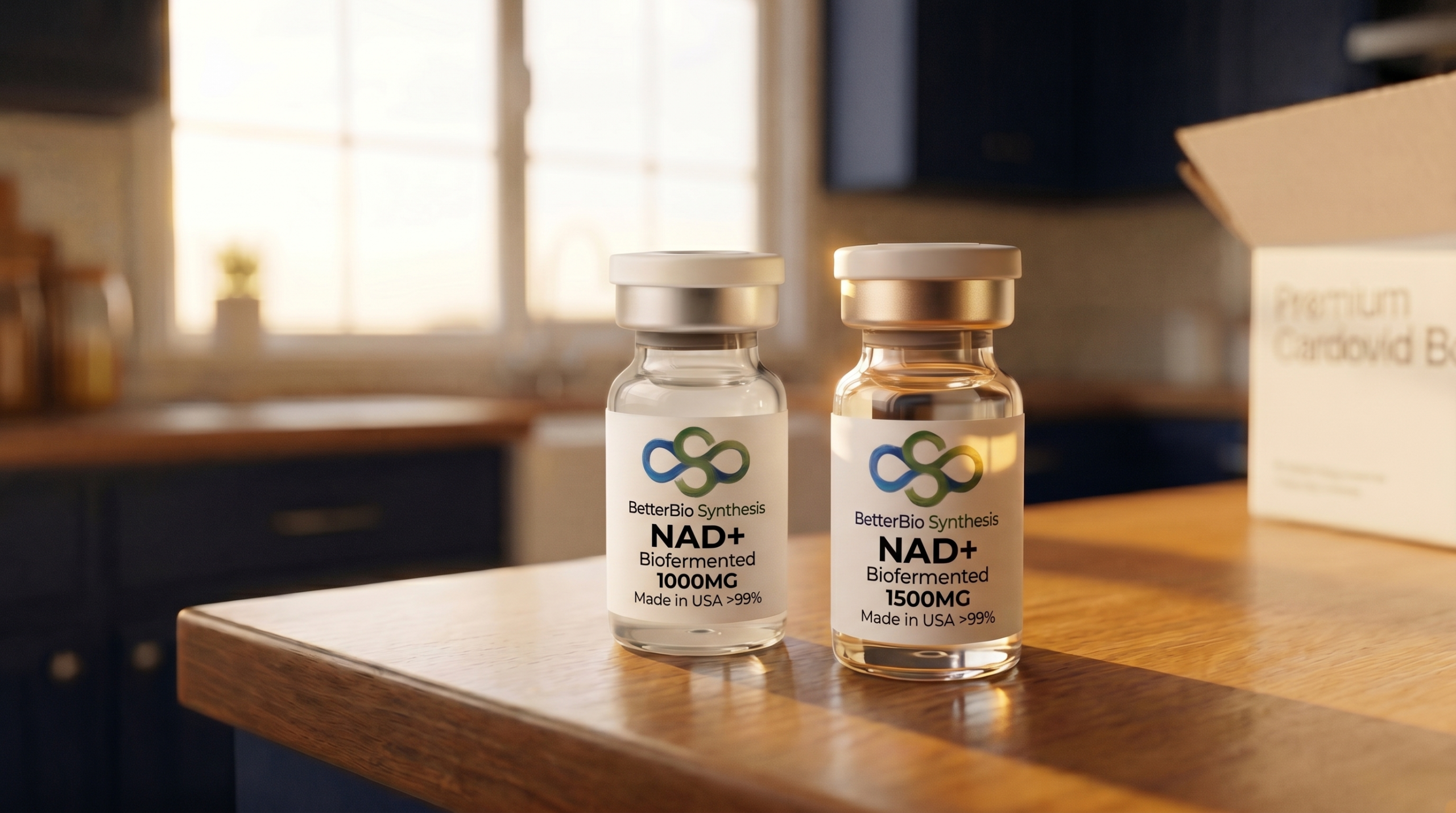
NAD+ (Biofermented): The Good, The Bad & The Research
NAD+ declines up to 80% with age. Learn the difference between biofermented and synthetic NAD+ and why it matters for re...
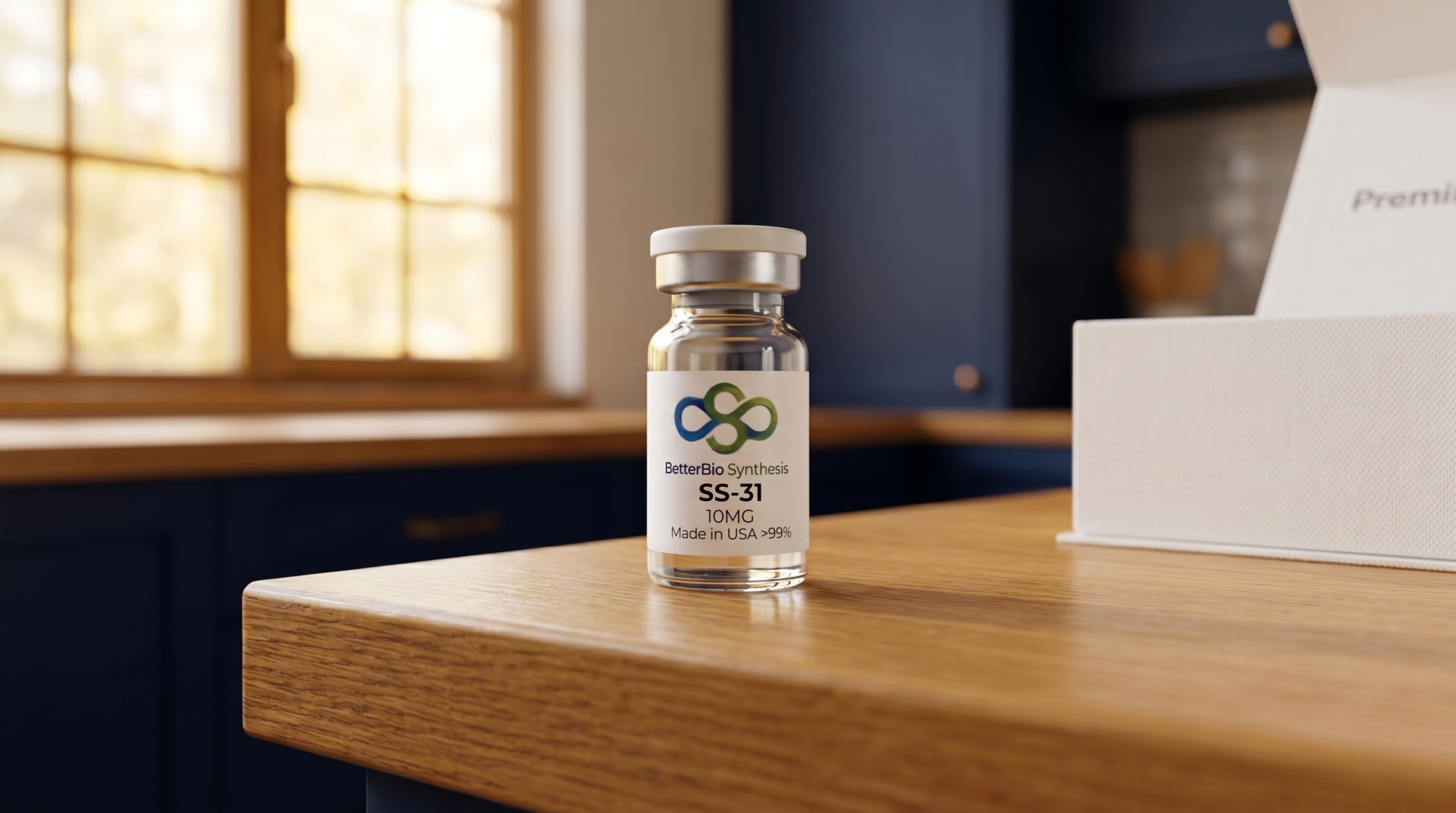
SS-31 (Elamipretide): The Good, The Bad & The Research
SS-31 research overview: mitochondrial biology, evidence limits, and the distinction between approved elamipretide medic...

The Wolverine Stack: BPC-157 + TB-500 Research Guide
The most recognized peptide combination in recovery research. BPC-157 handles local repair. TB-500 handles systemic reco...
What Is a Peptide? The Science Behind How They Work
A simple, science-backed guide to understanding what peptides are, how they work, and why they matter in modern research...

TB-500 (Thymosin Beta-4): The Good, The Bad & The Research
The science behind one of the most researched recovery and cardiac repair peptides available.

The Gut Health Research Stack: BPC-157, KPV, Thymosin Alpha-1 & GLP-2
Four peptides. Four mechanisms. The most comprehensive gut health research protocol currently being studied.

BPC-157: The Good, The Bad & The Research
The most researched gut healing peptide in existence — what the science actually shows about BPC-157 and intestinal repa...
BPC-157 and TB-500: Mechanisms in Tissue Repair Research
BPC-157 and TB-500 (Thymosin Beta-4) are frequently studied in combination. This article explores their distinct and ove...
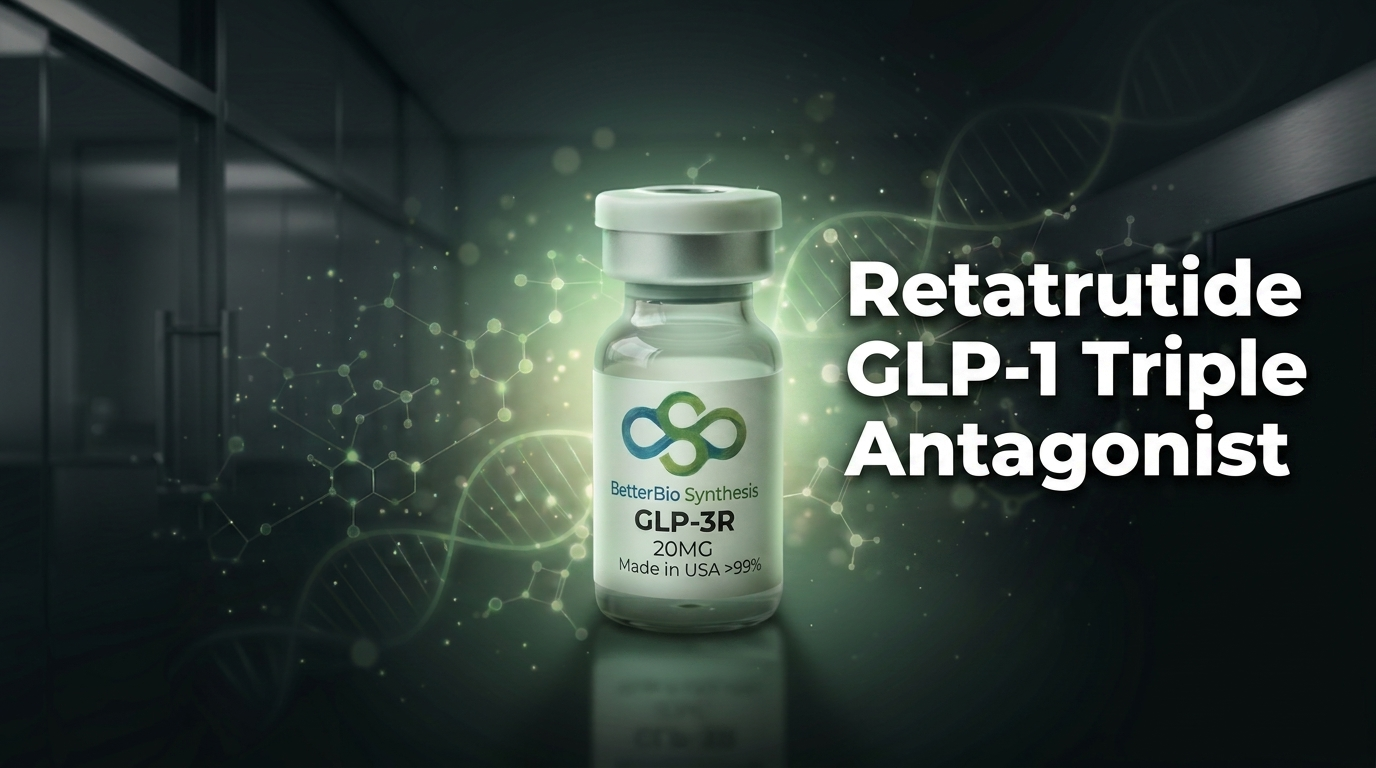
GLP-1/GIP/Glucagon Receptor Agonists: A Research Overview
An overview of the triple-agonist mechanism of action, receptor binding profiles, and the current state of metabolic res...
How to Read a Certificate of Analysis (COA) — Step by Step
COAs can look intimidating. This guide breaks down every section so you know exactly what you're looking at.
Residual Solvents: What ICH Q3C Means and Which Solvents to Avoid
Synthesis solvents that aren't fully removed can end up in your research compound. Here's how to identify them and what ...
Endotoxins: What They Are, Why They Matter, and How to Read the Test
Bacterial endotoxins are one of the most overlooked contaminants in research peptides. Here's everything you need to kno...
What Does '>99% Purity' Actually Mean?
A researcher's guide to understanding peptide purity claims — and why not all 99% claims are equal.
FoxO4-DRI and Senolytic Research
Senescent cells accumulate with age and drive inflammation. FoxO4-DRI is studied for its ability to selectively induce a...
What Does '>99% Purity' Actually Mean?
A researcher's guide to understanding peptide purity claims — and why not all 99% claims are equal.
Endotoxins: What They Are, Why They Matter, and How to Read the Test
Bacterial endotoxins are one of the most overlooked contaminants in research peptides. Here's everything you need to know.
Residual Solvents: What ICH Q3C Means and Which Solvents to Avoid
Synthesis solvents that aren't fully removed can end up in your research compound. Here's how to identify them and what the limits mean.
How to Read a Certificate of Analysis (COA) — Step by Step
COAs can look intimidating. This guide breaks down every section so you know exactly what you're looking at.
Proper Peptide Storage and Reconstitution
How you store and reconstitute your peptides directly affects their stability and your experimental results.
GLP-1/GIP/Glucagon Receptor Agonists: A Research Overview
An overview of the triple-agonist mechanism of action, receptor binding profiles, and the current state of metabolic research.
BPC-157 and TB-500: Mechanisms in Tissue Repair Research
BPC-157 and TB-500 (Thymosin Beta-4) are frequently studied in combination. This article explores their distinct and overlapping mechanisms.
FoxO4-DRI and Senolytic Research
Senescent cells accumulate with age and drive inflammation. FoxO4-DRI is studied for its ability to selectively induce apoptosis in senescent cells.
See Our Testing in Action
Browse available batch records, match the lot number on your label, and review the tests actually reported. Pending or unavailable records are marked in the library.
Peptide research and testing, explained
The Education library covers the questions that come up when researchers compare peptide materials and read laboratory results. Articles explain analytical methods, COA terms, sample handling concepts, and areas of active peptide research. They are written to help you understand what a result does and does not show.
A chromatogram can support a purity calculation, but it does not by itself establish the amount of peptide in a vial. Mass spectrometry can support an identity assessment, but its interpretation depends on the method and the data reported. Lot identifiers matter because a result from one lot should not be assumed to apply to another. Our articles walk through these distinctions with examples rather than treating a single metric as a blanket quality claim.
Educational articles are available to read in full without an account. All content is educational and all products are for research use only; nothing here provides medical guidance or directions for use in people or animals.
Start with the topic that matches the question in front of you. If you are reading a product certificate, a COA guide may be more useful than a broad review of a research area. When an article refers to published work, follow the original study for its methods and limitations.